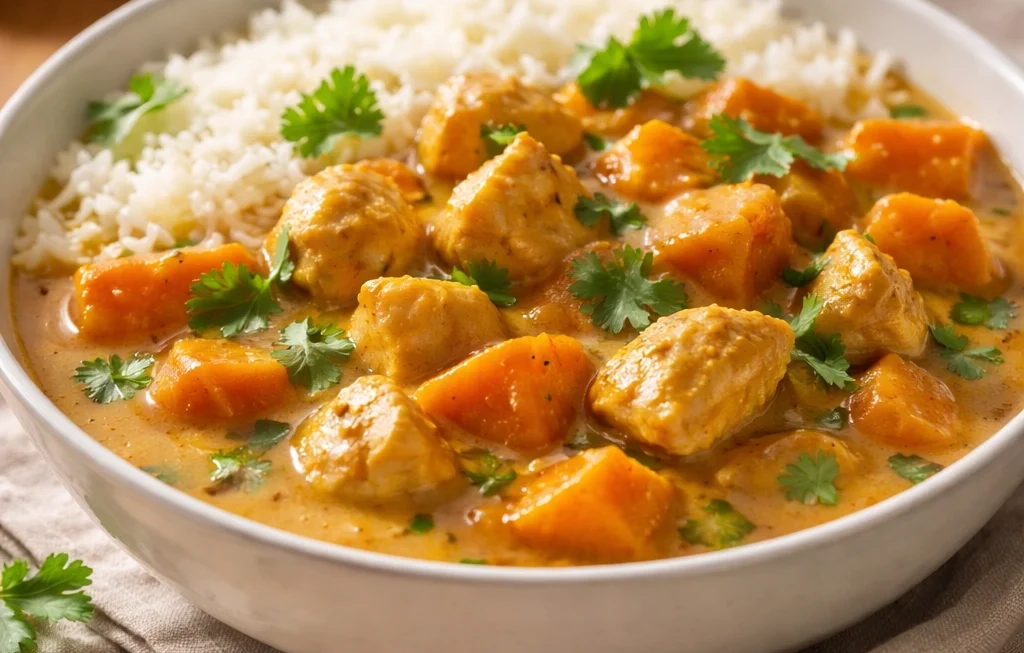
If there is one recipe that I genuinely get excited about every single time I make it, it is this one right here. Today, I am bringing you something that is warm, creamy, packed with flavour, and honestly one of the most comforting meals you can sit down to after a long day. We are making Coconut Curry Chicken With Rice Noodles, and trust me when I say this dish is about to become one of your absolute favourites.
This is the kind of meal that sounds like it came from a restaurant but is completely doable right in your own kitchen with ingredients that are not hard to find at all. The creamy coconut milk, the fragrant curry, the tender juicy chicken, and those silky smooth rice noodles all come together in a way that feels like every single bite was made just for you. Whether you love spicy food, mild food, or something right in the middle, this recipe can be adjusted to suit exactly what you like. So let us get straight into it because this one is too good to keep waiting.
What Is Coconut Curry Chicken With Rice Noodles?
Coconut Curry Chicken With Rice Noodles is a dish that brings together the rich, creamy flavours of a coconut-based curry with tender pieces of chicken and soft, slippery rice noodles that soak up all that gorgeous sauce. It draws inspiration from Southeast Asian cooking, particularly from Thai and Malaysian cuisine, where coconut milk and curry paste are used together to create bold, aromatic, deeply satisfying dishes.
The beauty of this dish is in how the ingredients work together. The coconut milk brings a natural sweetness and creaminess that softens the heat of the curry. The chicken adds substance and protein. The rice noodles soak up the sauce like little flavour sponges, so every strand is coated in that rich, fragrant curry. Fresh herbs, a squeeze of lime, and a few simple toppings at the end bring everything to life in the most wonderful way.
This is not a complicated dish at all. Once you understand the basic process, which is building the sauce, cooking the chicken, and bringing everything together with the noodles, you will be able to make this with your eyes closed. Let us start with what you need.
Ingredients You Will Need
Here are the required ingredients for this wonderful delicacy.
For the chicken:
- 500g chicken breast or chicken thighs, boneless and skinless, cut into bite-sized pieces
- 1 tablespoon soy sauce
- 1 teaspoon garlic powder
- Half a teaspoon turmeric
- Salt and black pepper to taste
- 1 tablespoon vegetable oil for cooking
For the coconut curry sauce:
- 2 tablespoons vegetable oil
- 1 medium onion, finely diced
- 4 cloves garlic, minced
- 1 tablespoon fresh ginger, grated
- 2 to 3 tablespoons red curry paste, depending on how spicy you like it
- 1 teaspoon ground turmeric
- 1 teaspoon ground coriander
- 1 teaspoon ground cumin
- 400ml full-fat coconut milk, one standard can
- 200ml chicken broth or water
- 1 tablespoon fish sauce or soy sauce for a vegetarian option
- 1 tablespoon brown sugar or honey
- Juice of one lime
- 1 teaspoon sesame oil
- 1 red bell pepper, sliced thin
- 1 cup baby spinach or pak choi
For the rice noodles:
- 200g flat rice noodles or rice vermicelli
- Enough boiling water to soak them according to packet instructions
For the toppings:
- Fresh coriander leaves
- Sliced spring onions
- Lime wedges
- Sliced red chilli for extra heat, optional
- Crushed roasted peanuts, optional
- Bean sprouts, optional
How To Make Coconut Curry Chicken With Rice Noodles
Here are breakdown steps on how to carry out this delicacy from start to finish.
Preparing the Chicken
The way you prepare and season the chicken before it goes into the pan makes a significant difference to the final flavour of the whole dish. You want the chicken to have its own flavour and seasoning so that when it joins the curry sauce, it adds to the dish rather than just floating in it without contributing anything.
Cut your chicken into bite-sized pieces, roughly the same size so they all cook at the same speed. Place them in a bowl and add the soy sauce, garlic powder, turmeric, salt, and pepper. Toss everything together until every piece of chicken is well coated. The turmeric gives the chicken a beautiful golden colour and a warm, earthy flavour that will complement the curry sauce perfectly. Let the chicken sit in this seasoning for at least 10 minutes. If you have more time, 30 minutes is even better.
Heat a tablespoon of vegetable oil in a large pan or wok over medium-high heat. Once the oil is hot, add the chicken pieces in a single layer. Do not stir them immediately. Let them cook undisturbed for about 2 to 3 minutes so they can develop a golden, slightly caramelised exterior. Then stir and cook for another 2 minutes until they are mostly cooked through but not completely done. They will finish cooking in the sauce, so do not overcook them at this stage.
Remove the chicken from the pan and set it aside on a plate. You will add it back later.
Helpful Tip: Chicken thighs are actually the better cut for this recipe compared to chicken breasts. Thighs have a slightly higher fat content which keeps them juicy and tender even after being cooked in the sauce. Chicken breasts can dry out if they are cooked for too long in liquid, so if you use breasts, be careful not to overcook them. Keep the heat at a medium simmer once they go back into the sauce and do not let it boil hard.
Building the Coconut Curry Sauce
This is where the magic happens. The curry sauce is the heart and soul of this entire dish, and building it properly in layers is what gives it that deep, complex, restaurant-quality flavour. The good news is that it is straightforward and every step makes sense once you are doing it.
In the same pan you used for the chicken, heat another two tablespoons of vegetable oil over medium heat. Add the diced onion and cook, stirring occasionally, for about 5 to 6 minutes until the onion has softened and turned slightly golden at the edges. The onion forms the base of your sauce, so give it enough time to properly soften and sweeten. Do not rush this step.
Add the minced garlic and grated ginger to the pan and stir everything together. Cook for about 1 to 2 minutes until the garlic and ginger become fragrant. You will be able to smell the difference immediately, the kitchen will start to smell absolutely incredible at this point.
Now add your red curry paste. Stir it into the onion, garlic, and ginger mixture and let it cook in the dry pan for about 2 minutes. This step is called blooming the spices, and it is very important. Cooking the curry paste in the oil before adding any liquid intensifies its flavour enormously. You are essentially frying the spices, which releases their essential oils and makes them much more aromatic and flavourful than if you just dumped them straight into liquid.
Add the ground turmeric, ground coriander, and ground cumin and stir everything together for another 30 seconds.
Pour in the coconut milk and chicken broth. Stir well to combine everything. Scrape up any bits stuck to the bottom of the pan because those bits are packed with flavour. Add the fish sauce or soy sauce, the brown sugar or honey, and stir again. The fish sauce adds a savoury depth that you cannot really describe but you would immediately miss if it was not there. The sugar balances the heat of the curry and the saltiness of the fish sauce. These two things together create that perfect harmony of sweet, salty, and spicy that makes a great curry sauce so addictive.
Bring the sauce to a gentle simmer and let it cook for about 8 to 10 minutes, stirring occasionally. You will notice the sauce starts to deepen in colour and the smell becomes even more incredible. Taste it at this point. It should be rich, slightly sweet, a little spicy, and deeply savoury. Adjust the seasoning if needed. If you want more heat, add a little more curry paste. If it tastes too spicy, add a little more coconut milk or a pinch more sugar to balance it out.
Helpful Tip: Full-fat coconut milk is essential for this recipe. Light coconut milk does not have enough fat content to create a rich, creamy sauce. It will taste thin and watery in comparison. Always reach for the full-fat version and you will get that luxurious, velvety sauce that makes this dish so special. Shake the can well before opening because the thick cream and the thinner liquid often separate inside the can.
Cooking the Noodles
While your sauce is simmering away and filling your kitchen with an incredible smell, prepare your rice noodles. Rice noodles do not need to be boiled the same way as regular pasta. Most rice noodles simply need to be soaked in hot water for a few minutes to become soft and pliable.
Place the rice noodles in a large heatproof bowl and pour over enough boiling water to completely cover them. Let them soak for about 5 to 8 minutes, checking them as they go. You want them to be just tender but still with a slight firmness to them. They should not be completely soft and mushy at this stage because they will continue to soften when you add them to the hot sauce.
Once they are just tender, drain them immediately and rinse them quickly under cold water to stop them from cooking further and sticking together. Toss them with a tiny drizzle of sesame oil to keep them from clumping. Set them aside.
Helpful Tip: Different brands of rice noodles have different soaking times, so always check the instructions on your specific packet. The thickness of the noodle also affects the time. Thin rice vermicelli soaks in as little as 3 to 4 minutes, while wider flat rice noodles can take 7 to 10 minutes. Always slightly undercook them at this stage because they will finish in the sauce.
Bringing Everything Together
Now comes the most satisfying part of the whole process, bringing every component together into one glorious pot of deliciousness.
Add your sliced red bell pepper to the simmering sauce and stir it in. Let it cook for about 3 minutes. The pepper adds sweetness, colour, and a slight crunch that gives the dish a nice textural contrast.
Add the cooked chicken pieces back into the sauce. Stir gently to coat everything in the sauce and let it simmer together for about 4 to 5 minutes. The chicken will finish cooking through in the sauce and will absorb all those beautiful flavours at the same time.
Add the baby spinach or pak choi and stir it in. It will wilt down very quickly, in about 1 to 2 minutes, adding a fresh, slightly earthy element to the dish that balances the richness of the coconut sauce beautifully.
Squeeze in the juice of one lime and stir it in. This final squeeze of lime brightens the entire sauce and lifts all the flavours. It is one of those additions where you will taste the sauce before and after and immediately understand why it is not optional. The lime makes everything taste more vibrant and alive.
Add the rice noodles directly into the sauce and toss gently to coat them. Use tongs or two large spoons to gently fold the noodles through the sauce so every strand gets coated. Let everything sit together over low heat for just 1 to 2 minutes so the noodles fully absorb the flavours of the sauce.
Serve immediately in deep bowls and add your toppings. Fresh coriander, sliced spring onions, a wedge of lime on the side, crushed peanuts for crunch, bean sprouts for freshness, and sliced red chilli if you want extra heat. These toppings are not just decorative. They add completely different textures and fresh flavours that make each bite interesting and exciting.
Helpful Tips for the Best Coconut Curry Chicken With Rice Noodles
There are several things that will take this dish from good to genuinely exceptional. These tips come from experience and understanding why each step matters.
Use red curry paste for this recipe. Red curry paste has a bold, slightly smoky, medium-spicy flavour that works beautifully with coconut milk. Green curry paste is more herby and sharper in flavour, while yellow curry paste is milder and slightly sweeter. Red is the most versatile and creates the most balanced, crowd-pleasing sauce for this particular dish. If you want it milder, use less paste. If you want it hotter, use more.
Do not skip the ginger. Fresh ginger adds a warmth and brightness to the curry sauce that dried ginger powder simply cannot replicate. Grate it on a fine grater or chop it as finely as possible so it melts into the sauce rather than being detectable as a separate chunky ingredient. The combination of garlic and fresh ginger is one of the fundamental building blocks of great Asian-inspired cooking and it makes an enormous difference here.
Balance your sauce before adding the noodles. Always taste and adjust the curry sauce before the noodles go in. Once the noodles are in, the flavour balance shifts because the starchy noodles absorb some of the sauce’s saltiness and acidity. Get the sauce tasting perfect on its own first, slightly bolder and more intensely seasoned than you think you need, and it will taste just right once the noodles are in.
Serve the dish immediately. Rice noodles continue to absorb liquid even after they are off the heat. If the dish sits for too long before serving, the noodles will soak up most of the sauce and become bloated and overly soft. Get it into bowls and on the table right away for the best experience.
Add toppings generously. The fresh coriander, lime, spring onions, and peanuts are not afterthoughts. They are essential components of the finished dish. The lime adds brightness, the coriander adds freshness, the spring onions add a gentle sharpness, and the peanuts add a satisfying crunch that contrasts the soft noodles and creamy sauce in the most wonderful way. Do not skip them.
Variations of Coconut Curry Chicken With Rice Noodles
This recipe is wonderfully flexible and there are many ways to adapt it to different tastes, dietary needs, and whatever you have available in your kitchen.
Making It Vegetarian or Vegan
Swap the chicken out completely and replace it with firm tofu, chickpeas, or a combination of both. Press the tofu dry and cut it into cubes, then pan-fry it until golden before adding it to the sauce. This gives it a firm, slightly crispy exterior that holds up well in the sauce without falling apart. Replace the fish sauce with soy sauce or tamari, use vegetable broth instead of chicken broth, and use coconut milk as normal. Every other step remains exactly the same and the result is just as rich and satisfying.
Making It Spicier
If you are someone who really loves heat, there are several ways to turn this dish up. First, increase the amount of red curry paste to 4 or even 5 tablespoons. Second, add one or two fresh red chillies, finely sliced, along with the garlic and ginger. Third, add a teaspoon of chilli oil or chilli flakes at the end along with the lime juice. You can also serve extra fresh sliced chilli at the table so everyone can control their own heat level.
Making It Milder for Kids
For a milder, family-friendly version, reduce the curry paste to just one tablespoon and make sure there are no fresh chillies added anywhere. The coconut milk already brings a natural sweetness and creaminess that tempers the heat beautifully. You can also add a little more sugar or honey to soften the flavour further. Most children love the creamy coconut sauce and the soft noodles, so a milder version is a great way to introduce them to Asian-inspired flavours without overwhelming their palate.
Adding More Vegetables
This dish is a fantastic vehicle for vegetables. You can add almost any vegetable you like and it will work. Sliced mushrooms add an earthy, meaty quality. Broccoli florets or green beans add colour and crunch. Sliced zucchini or courgette cooks quickly in the sauce and absorbs flavour beautifully. Sweet potato adds a hearty, slightly sweet element that pairs wonderfully with the coconut and curry. Add heartier vegetables like sweet potato or broccoli earlier in the cooking process and quicker-cooking ones like zucchini or spinach closer to the end.
How To Store and Reheat Leftovers
This dish stores reasonably well but there is one important thing to keep in mind about the noodles. Rice noodles continue to absorb liquid as they sit, so if you store the finished dish with the noodles mixed in, you will find that by the next day the noodles have soaked up most of the sauce and become very soft and bloated.
The best way to handle this is to store the curry sauce and chicken separately from the noodles. Keep the sauce in an airtight container in the fridge for up to 4 days. The sauce actually tastes even better the next day as all the flavours have had time to settle and deepen overnight. Store any leftover cooked noodles separately in a container with a tiny drizzle of sesame oil mixed through to prevent them from sticking together. Reheat the sauce gently on the stove over medium heat, adding a splash of water or coconut milk if it has thickened too much, then add freshly soaked noodles or gently reheat the stored noodles in a little hot water before combining.
The curry sauce also freezes very well for up to 3 months. Freeze it without the noodles and simply cook fresh noodles when you are ready to eat. This makes it an excellent option for meal prepping because you can make a large batch of the sauce, freeze portions, and have a flavourful dinner ready in minutes on any busy weeknight.
The Nutritional Benefits of This Dish
Coconut Curry Chicken With Rice Noodles is not just delicious, it is also a genuinely nutritious meal that provides your body with a good range of important nutrients.
Chicken is one of the best lean protein sources available. Protein is essential for building and repairing muscle tissue, keeping your immune system strong, and helping you feel full and satisfied after eating. Using chicken thighs provides a slightly higher fat content which contributes to the richness of the dish while still being a relatively lean choice compared to red meat.
Coconut milk contains medium-chain triglycerides, which is a type of healthy fat that your body processes differently from other fats. These fats are used for energy relatively quickly by the body rather than being stored. Coconut milk also contains lauric acid, which has been studied for its potential antimicrobial and immune-supporting properties.
The spices in this dish, particularly turmeric, ginger, and cumin, all have well-documented health benefits. Turmeric contains curcumin, which is a powerful anti-inflammatory compound. Ginger supports digestion and has anti-nausea properties. Cumin is rich in iron and has antioxidant properties. The combination of these spices means every bowl of this curry is doing your body real good while tasting absolutely incredible at the same time.
Rice noodles are naturally gluten-free and provide carbohydrates for energy. They are lighter and easier to digest than wheat-based pasta for many people. The vegetables added to the dish, whether spinach, bell pepper, pak choi, or others, contribute essential vitamins, minerals, and dietary fibre that support overall health and digestion.
Frequently Asked Questions
Can I use coconut cream instead of coconut milk in this recipe?
Yes, you can, but the result will be noticeably richer and thicker. Coconut cream has a much higher fat content and less water than coconut milk, which means your sauce will be more dense and intensely creamy. If you use coconut cream, dilute it with a little extra chicken broth or water to bring the consistency closer to what you would get with coconut milk. Some people actually prefer the richer result from coconut cream, so it really comes down to personal taste. Just be aware that the sauce will need a little more liquid to reach the right pourable consistency.
What can I use instead of red curry paste if I cannot find it?
If red curry paste is not available at your local store, you can create a rough substitute by combining a tablespoon of tomato paste with half a teaspoon each of chilli flakes, ground cumin, ground coriander, ground turmeric, garlic powder, and ginger powder. It will not have the same depth as a proper curry paste but it will give you a decent flavour base to work with. Alternatively, a good quality curry powder can be used in a pinch, about 2 tablespoons for this recipe, though the flavour profile will be closer to an Indian-style curry than a Thai one.
My sauce is too thin. How do I thicken it?
There are two easy ways to thicken a coconut curry sauce. The first is to simply let it simmer uncovered for longer. As the sauce cooks, water evaporates and the sauce reduces and thickens naturally. Keep the heat at a medium simmer and stir regularly to prevent sticking. The second option is to mix a teaspoon of cornstarch with two teaspoons of cold water until completely smooth, then stir this mixture into the simmering sauce. It will thicken within a minute or two. Add a little at a time and check the consistency rather than adding it all at once.
Can I make this recipe with shrimp instead of chicken?
Absolutely, and it is a wonderful variation. Large raw shrimp work beautifully in this sauce. Season them with garlic powder, salt, pepper, and a pinch of turmeric just like the chicken. Cook them in a hot pan with a little oil for about 1 to 2 minutes per side until they turn pink, then set them aside. Add them back into the sauce right at the very end, just before the noodles go in, and let them warm through for about 1 minute. Shrimp cook very quickly so do not add them too early or they will become rubbery and tough.
How do I stop my rice noodles from sticking together?
Rice noodles stick together when they cool down and the starch on their surface makes them clump into a solid mass. There are three things you can do to prevent this. First, rinse them thoroughly under cold water immediately after draining them. This removes the surface starch and stops the sticking. Second, toss them with a small drizzle of sesame oil or vegetable oil right after rinsing. The oil coats each noodle and keeps them separate. Third, add them to the sauce and serve immediately rather than letting them sit out for a long time. If they have already stuck together before you add them to the sauce, just drop them into the warm sauce and use tongs to gently loosen and separate them as they warm through.
Conclusion
Coconut Curry Chicken With Rice Noodles is one of those recipes that genuinely delivers on every level. It is deeply flavourful, it is comforting without being heavy, it is filling without leaving you feeling sluggish, and it is beautiful to look at when it is served in a bowl with all those fresh toppings scattered over the top. Every single component plays an important role, from the well-seasoned golden chicken to the fragrant curry sauce to the silky noodles that carry all that incredible flavour in every strand.
What makes this recipe so special is also what makes it so accessible. You do not need any fancy equipment, you do not need professional cooking skills, and you do not need a long list of hard-to-find ingredients. What you do need is a little patience, a willingness to taste and adjust as you go, and an appreciation for the process of building layers of flavour one step at a time. Follow the steps in this article and you will produce something that tastes like it came from a really good restaurant.
Make this recipe your own by experimenting with different vegetables, adjusting the spice level to suit your family, or trying the shrimp variation on a different week. Once you have the basic method down, the possibilities are endless and every version will be delicious. This is the kind of dish that earns a permanent place in your regular meal rotation, and everyone who sits at your table will be very glad it did. Enjoy every single bite!
Recipes Ideas:
Thai Shrimp Fried Rice Recipe
Today, I am sharing with you a Thai Shrimp Fried Rice recipe that is going...Asian Sesame Noodles Dish
Hey friend, welcome back to my recipe blog! If you are looking for a recip...Brown Butter Sage Butternut Squash Pasta
Okay, if you have been looking for a pasta recipe that feels like a warm h...Dirty Rice with Ground Beef Recipe
You know those recipes that sound simple but taste like you spent all day ...Quick Dinner Recipes In 20 Minutes
Raise your hand if you have ever come home after a long day, opened the fr...Slow Cooker Chicken and Sweet Potato Curry Meal
Get ready, because this recipe right here is about to become one of the mo...Instant Pot Beef and Broccoli Recipe
You are about to meet your new favourite weeknight dinner. If you have eve...